Julian Ross: You’ve made several short films — of girls (2022) and A Prelude (2024) that touch on the writer Fumiko Hayashi. What drew you to her, and how did your research expand to include the two other writers?
Wendelien van Oldenborgh: It started with of girls, when I was researching feminism in Japan. I came across Hayashi’s writing from the 1920s and 1930s, and it was totally punk. It was so strong, so full of bodily desires, which I hadn’t expected. She came from a very poor background and became a popular writer, and had a queer side I wanted to pull out in my short film of girls.
Soon, I discovered that she’d spent time in Indonesia, and that clicked with me. Japan and Indonesia have a history that hardly comes out in Japanese accounts of the Pacific War. And from the Dutch perspective, Japan generally enters the story through the trauma of the internment camps, rather than how these forces created the contemporary situation. When we concentrate on our postcolonial history in the Netherlands, it’s often just the Netherlands and Indonesia, but Indonesia became independent because of Japan’s invasion that drove the Netherlands out. I wanted to look at this triangle.
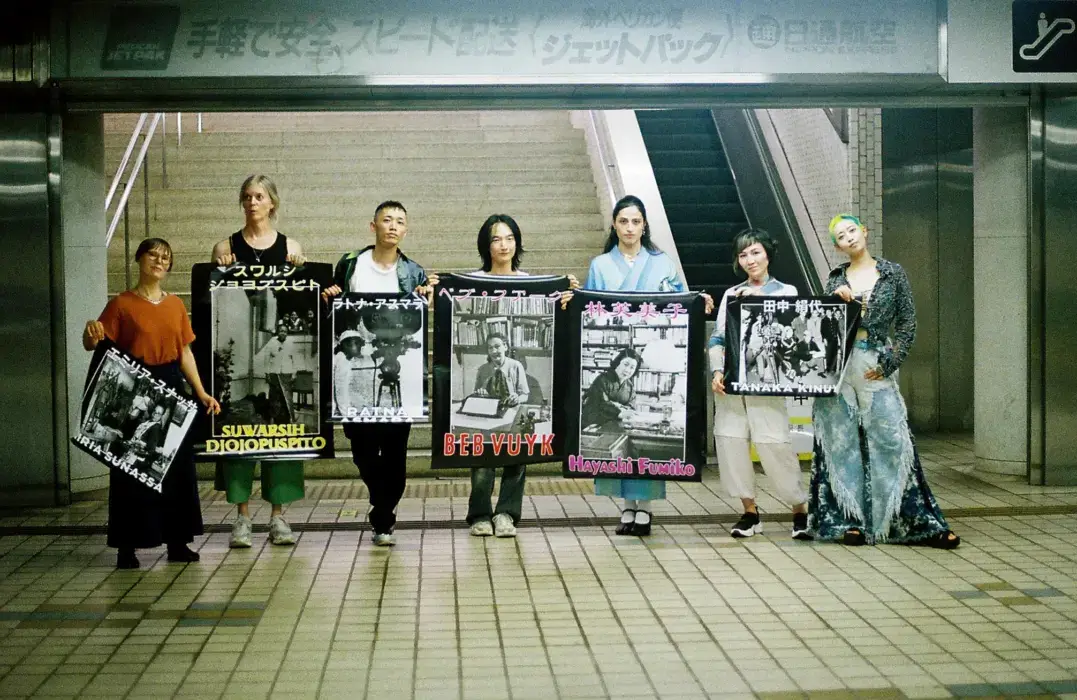
I already had a book by Suwarsih Djojopuspito that I’d wanted to do something with for years. She’s a nationalist, a pedagogue, a feminist, and an amazing writer. Then I found Beb Vuyk, who was born in Rotterdam, like myself. She’s one of the few voices in Dutch East Indies literature who was deeply critical of the colonial situation. Her writing style reminds of Hayashi’s, at least in her modernist poetic prose. In Indonesia, I met Djojopuspito’s granddaughter and asked whether she knew of Beb Vuyk. She said, “Yes, I think she came to the house.” They actually knew each other! Then, quite coincidentally, I discovered that Vuyk had translated a story by Hayashi in 1962. It was a huge sensation for me. All three were writing in the same period.
Julian: In the film, these writers are discussed but also embodied by several people. How did you arrive at this approach?
Wendelien: We struggled to find a word to describe what we’re doing and arrived at ‘embodiment.’ I wanted the women’s writing to be present in the film, because I think that’s more important than the figures themselves. We can never really know who they were, how they behaved or exactly what they said, but we know what they wrote. I wanted to approach them through many voices, without making biographies. But I also wanted to explore transformation. When someone is interested in a historical figure, can they transform into that figure?
One example was Luna Oliver, who is an amazing conceptual drag artist by the name of Andromeda, who I knew already through earlier works I’d made: obviously she’s comfortable with the idea of transformation. Another example is Yoshi Ishikawa, whom I asked to approach Beb Vuyk. They found it difficult. They said, “How can I, as a Japanese person, do anything with her? She was imprisoned by the Japanese. I’m on the other side of that history.” I said, well, that could be part of it. How do you approach her without losing yourself, while giving the subject the care she deserves? People move in and out of being these characters. They start by saying “she” and suddenly say “I”. Each historical figure is represented by several people, so there’s never one definitive version. I think that’s an interesting method for approaching somebody from history.
Julian: These figures complicate our ideas about feminism and nationalism. Why was it important to bring them into the present?
Wendelien: Hayashi has been criticised for never apologising for working for the Japanese regime. She went to Indonesia as a famous writer, sent by a propaganda newspaper. But because she didn’t apologise, I actually found her quite strong. Maybe that’s personal, but it’s so easy after a conflict to say, “I’m sorry, I didn’t mean it.” But how do you actually account for what you’ve done?
Hayashi was an incredibly strong figure for women in oppressed situations. She wrote from a position of understanding and solidarity with them, and she wrote beautifully. I don’t want to take that away because she couldn’t, or didn’t, extend that solidarity to colonised people in Indonesia. Of course, that was wrong of her, but I wouldn’t want to dismiss her entirely. While she didn’t apologise, her writing starts to take the Indonesian side into account, although we also problematise that in the film. None of us is a completely good person. Art is exactly the place where these complexities can exist. I’m interested in figures we can admire but can never turn into heroes.
I also wanted to oppose the nationalist tendencies we’re seeing in so many countries, and the authoritarian regimes emerging from them. Queer movements are opposing these tendencies and reaching each other transnationally. I thought it would be interesting to connect them to these women from different parts of the world co-existing in the 1930s.
Julian: Group discussions and polyphony have been central to your practice for years. In cinema and documentary, we tend to see directors focusing on a single protagonist; why do you work with multiple voices?
Wendelien: I think it’s a flaw. I can’t do otherwise! I never started making films from the point of view of wanting to do the right thing in cinema. I was interested in using film production as a methodology for producing a social situation, as a way to produce anything.
From very early on, I was interested in polyphony as a political attitude. You put a lot of sounds together in a horizontal way and still produce something, rather than having one leading voice and the others harmonising around it. What this multifocal approach offers is space for anybody, including the viewer, to take their own place. There isn’t one position presented as central or correct. For me, art needs to open up possibilities for sharing knowledge while leaving space for the spectator to bring their own knowledge. It’s like what Jacques Rancière and Bertolt Brecht said: the spectator must be able to think for themselves.
Julian: The club scenes feel like moments when time and place collapse. What drew you to these spaces?
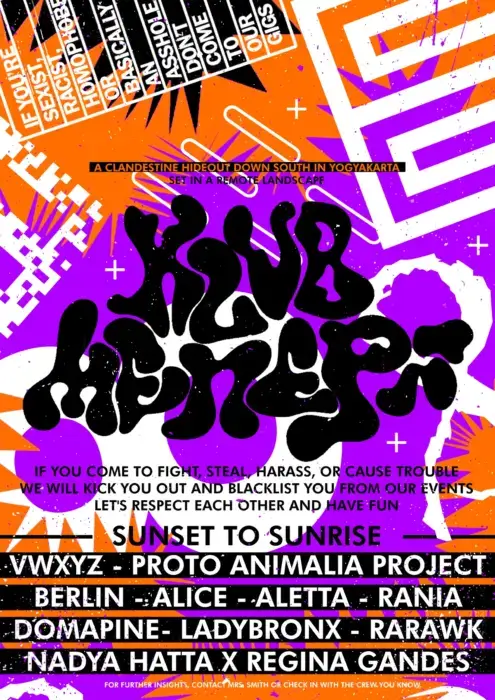
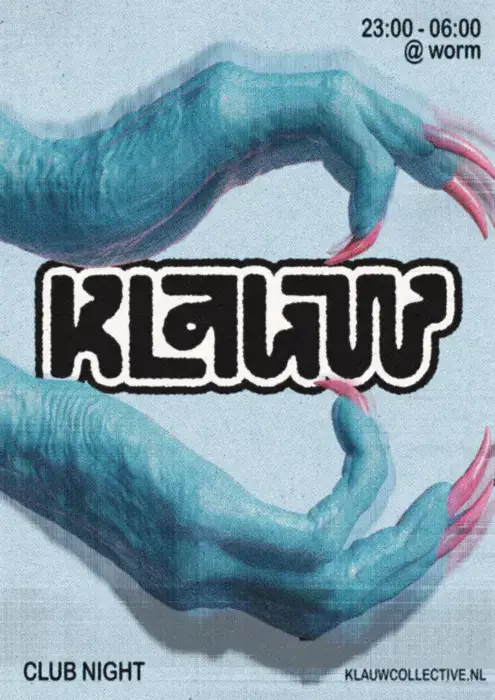
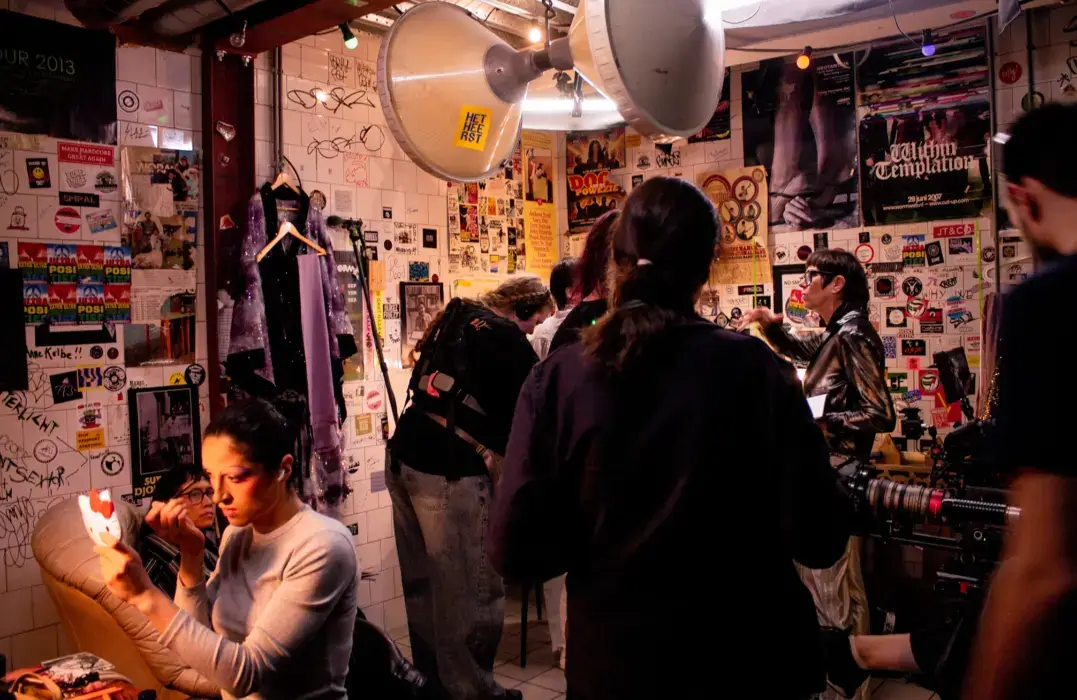
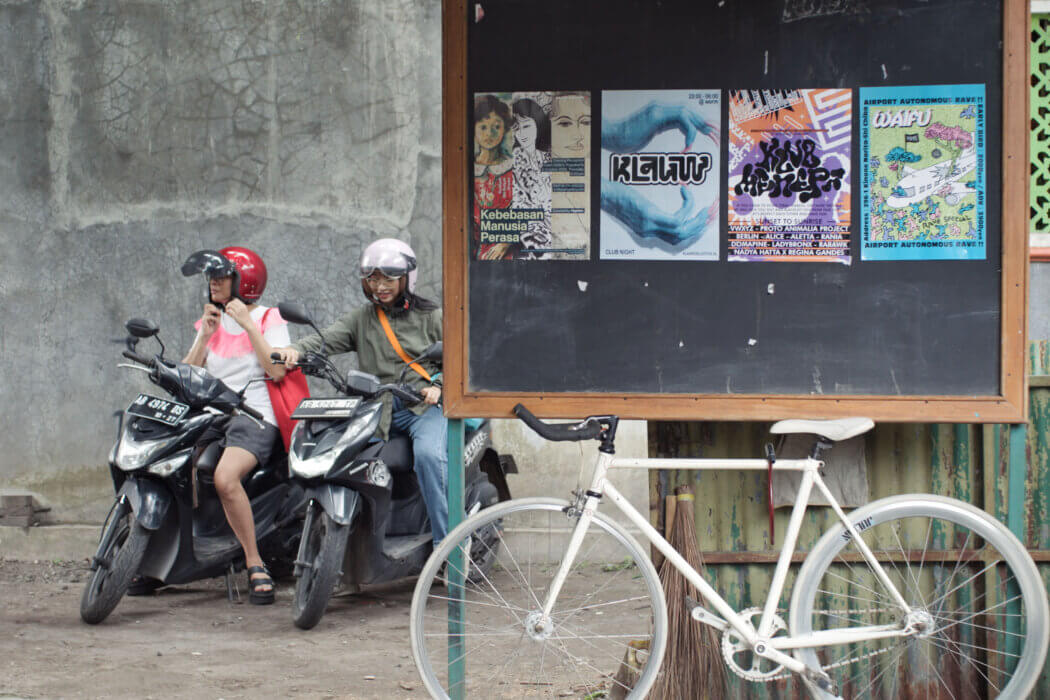
Wendelien: I love music and dancing. In Japan, some of the people I worked with on of girls organise raves in unusual locations, often announced only shortly before the event. I loved that. I wanted to connect these queer movements transnationally in the film, but filming became an interesting problem. How do you film at a party that’s supposed to be a safe space, where people find each other? The Dutch party KLAUW, for example, has a strict no-camera policy. We had to think together carefully how filming could take place, making sure everyone knew and could choose not to be filmed. In all three raves, the collectives communicated clearly to their following and also offered cheaper entry prices, and in the case of KLAUW, they set up a separate dance floor for those who didn’t want to be filmed.
What I love in the footage is the joy. These parties generate an extraordinary sense of togetherness. Queer club culture has long been a political space. These parties welcome queer and trans people, often in places with histories of resistance. Of course there are struggles, but these aren’t spaces defined by fear or misery. They’re places of joy, of embracing togetherness. I felt that, at this moment, I didn’t want to make another work simply pointing out everything that’s wrong, everything that’s dark. I wanted to strengthen what’s already there. To strengthen the world I would like to live in.
Julian Ross is Sector Manager – Programming, Distribution & Exhibitions at Eye Filmmuseum, Amsterdam.

images:
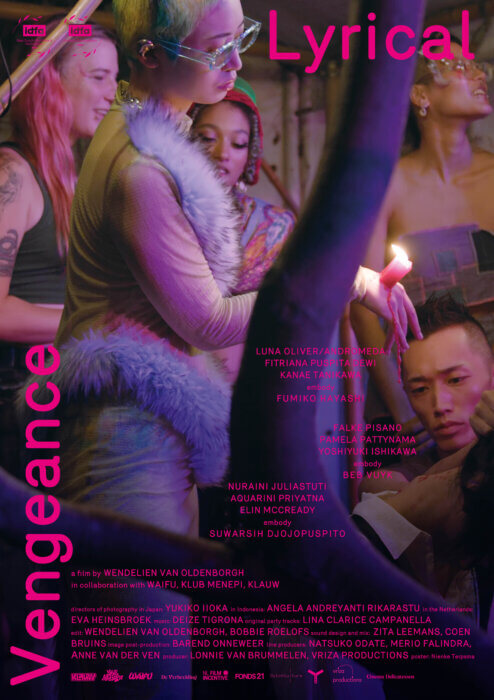
poster designed by Nienke Terpsma
production still Japan, photo by Japan by Jeremy Benkemoun
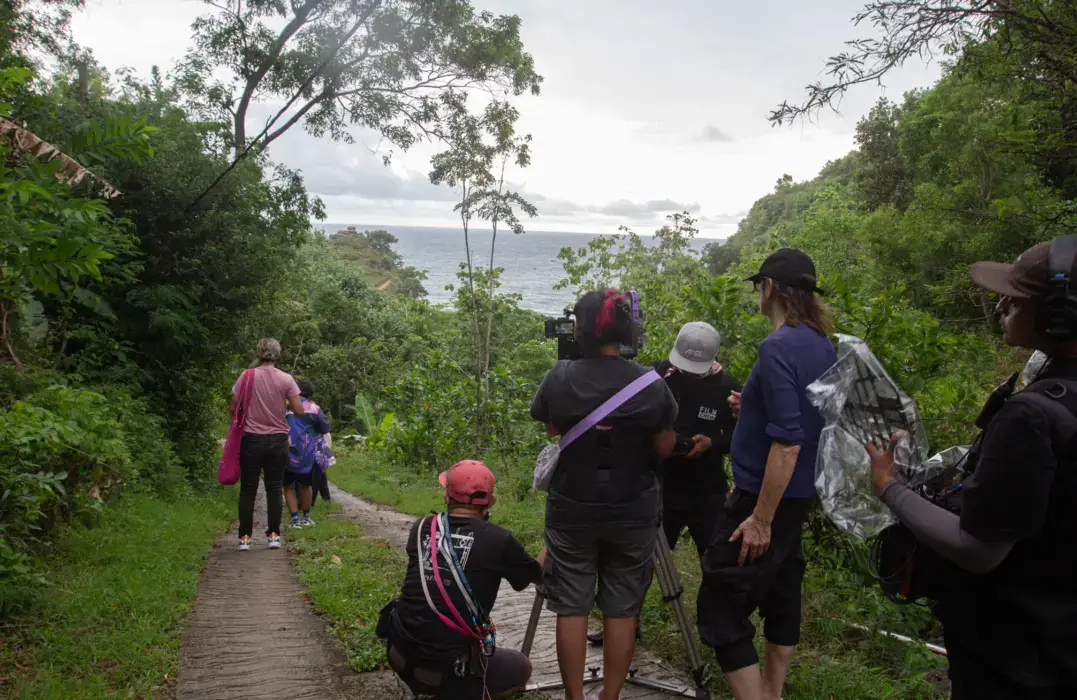
production still Indonesia, photo by Gevi Noviyanti
production still Netherlands, photo by Joel Quayson
film still Lyrical Vengeance